
In traditional Chinese medicine, the meridian system of the body is a network of pathways for energy flow. This article explains its role in health, types of meridians, and their significance.
Key Takeaways
- The meridian system, comprising principal and extraordinary meridians, is fundamental in traditional Chinese medicine for the circulation of Qi and the maintenance of health.
- Balancing Yin and Yang meridians is essential for optimal health, as they govern internal (Yin) and external (Yang) energy flow, influencing both physical and emotional well-being.
- Acupuncture points along meridian pathways play a crucial role in treatment efficacy, and their recognition is increasingly integrated into modern healthcare practices, enhancing holistic patient care.
Understanding the Meridian System

In traditional Chinese medicine, the meridian system circulates Qi throughout the body and its organs. This intricate network is fundamental, providing insights into bodily functions and disease treatment. Balancing Yin and Yang meridians is crucial for overall health and continuous energy flow.
The system is classified into principal (primary) meridians and extraordinary meridians, called principal meridians. The twelve major principal meridians are directly linked to specific organs and functions, while important meridians serve as energy reservoirs, supporting the primary channels in maintaining balance and health.
Principal Meridians
The twelve principal meridians are vital to the body’s energy system, each linked to specific organs and functions. Acupuncture points along these channels influence energy flow throughout the body. Each of these channels has a unique role; for instance, the heart meridian is associated with mental and emotional health, and its imbalance can lead to
The liver meridian is linked to liver health, detoxification, and emotional balance. The spleen meridian, starting at the big toe, affects digestion, while the stomach meridian is crucial for processing food and energy production.
Imbalances in these meridians can cause deficiencies, highlighting the interconnection between physical and emotional health. The pericardium meridian, running from the chest to the hand, protects the heart.
Extraordinary Meridians
The eight extraordinary meridians act as energy reservoirs, supporting internal organ systems without linking to specific organs. They maintain balance and ensure energy flow continuity when primary meridians are overburdened or imbalanced, as the meridians function to regulate this energy.
Yin and Yang Meridians
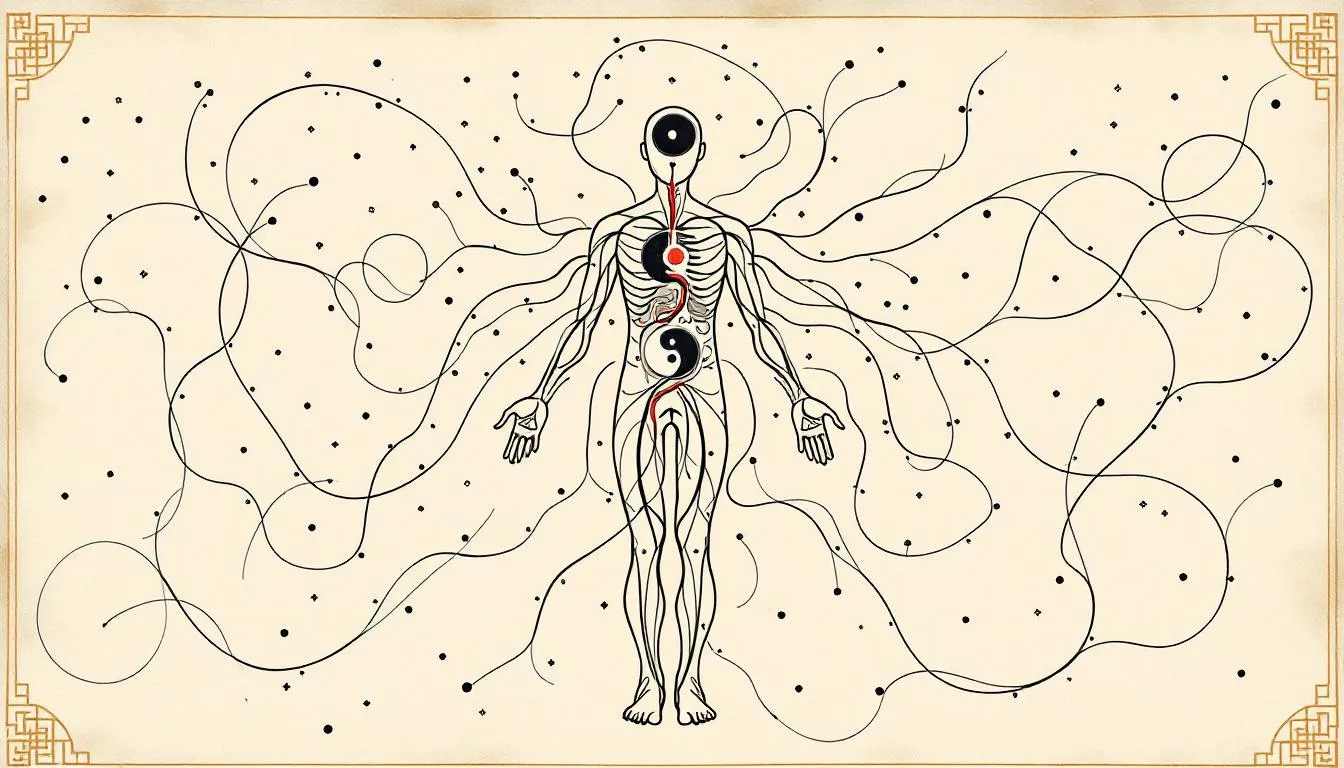
In traditional Chinese medicine, the balance between Yin and yang channels is paramount for optimal health. Yin meridians are associated with deeper, internal organs and restorative functions, while Yang meridians relate to more active, external aspects of energy flow.
This duality mirrors the broader Chinese medicine philosophy of balance and harmony within the human body, where the flow of energy, or Qi, must be regulated to maintain physical and emotional well-being, including the ren mai.
Yin Meridians
Yin meridians are linked to deeper, internal organs and characterized by inward energy movement. Key points about Yin meridians include:
- Meridians like the Spleen, Kidney, and Liver in the leg are essential for energy storage and regulation.
- Each Yin meridian supports both emotional and physical health.
- The Kidney Meridian is vital for maintaining vitality and managing anxiety.
Yin meridians support emotional and psychological well-being alongside physical health. Often viewed as the body’s root system, they provide nourishment and stability, essential for maintaining balance against the active, outward energy of Yang meridians.
Yang Meridians
Yang meridians are responsible for active, dynamic energy aspects in the body, supporting movement and metabolism. Arm Yang meridians include the large intestine meridian, Small Intestine, and triple burner meridian, while leg Yang meridians cover the Stomach, Bladder, and Gall Bladder. These meridians reflect external functions and embody active qualities.
Grasping the holistic approach of traditional Chinese medicine involves understanding the interplay between Yin and Yang meridians.
Major Meridians and Their Functions

The twelve principal meridians serve as a circulatory system for Qi, ensuring energy flow throughout the body. Yang meridians, linked to external organs like the Stomach and bladder meridian, are vital for physical activity and outward functions. They facilitate movement, motivation, and action, essential for maintaining overall energy balance and supporting various physiological processes.
Heart Meridian
The heart meridian, known as the ‘King of the Organs,’ is crucial for emotional well-being and physical health. Its functions include regulating circulation, maintaining mental health, and defending against disease.
This meridian begins near the armpit and ends at the tip of the little finger, highlighting how this meridian corresponds to its extensive influence across the body.
Lung Meridian
The lung meridian is vital energy for energy control, connecting breath with overall vitality and health. It regulates respiratory functions and ensures balanced energy levels in the body.
Stomach Meridian
The stomach meridian extracts energy from food and beverages, processes food energy, and maintains overall energetic balance. Passing through the mouth, nose, and teeth, it plays a critical role in digestion and energy production.
Detailed Pathways of Key Meridians
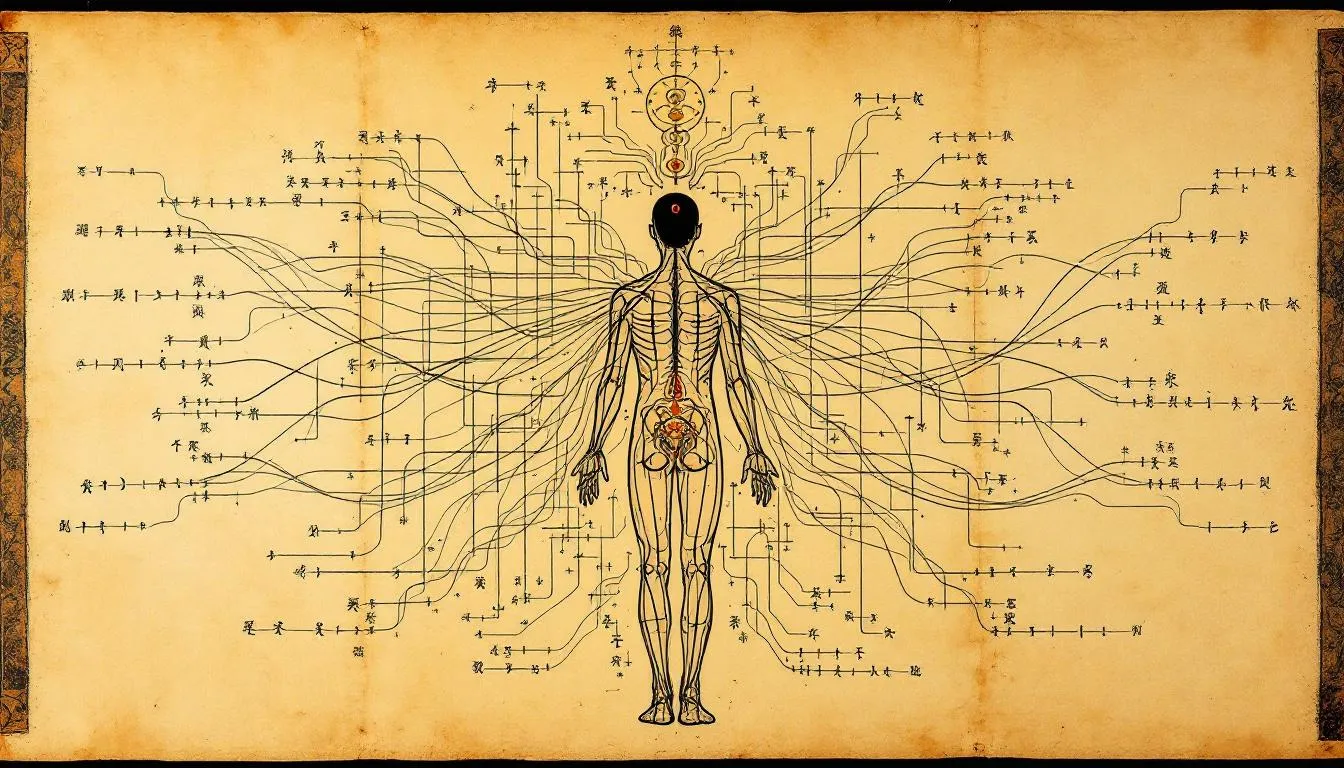
Meridian pathways are key channels for energy flow, impacting both physical and emotional health. Mapping these pathways enhances understanding of their roles in well-being, providing insights into how energy flows and influences different body parts within the meridian network.
Liver Meridian Pathway
The Liver Meridian starts at the inside of the big toe nail and travels upward towards the chest. It connects with:
- the liver
- gall bladder
- lung meridian
- eyes
- Governor Vessel Meridian highlighting its extensive network and influence.
Gallbladder Meridian Pathway
The gallbladder meridian begins at the outer corner of the eye and follows a course corresponding to the fascia lata, between points GB 35 and GB 36. This pathway is crucial for understanding the gallbladder’s role in maintaining energy flow and balance, as well as the inner eye.
Kidney Meridian Pathway
The Kidney Meridian begins at the outside of the little toe and ends beside the root of the tongue. It is crucial for maintaining vitality and linked to anxiety and fear, emphasizing its importance in physical and emotional health.
Acupuncture Points and Their Locations
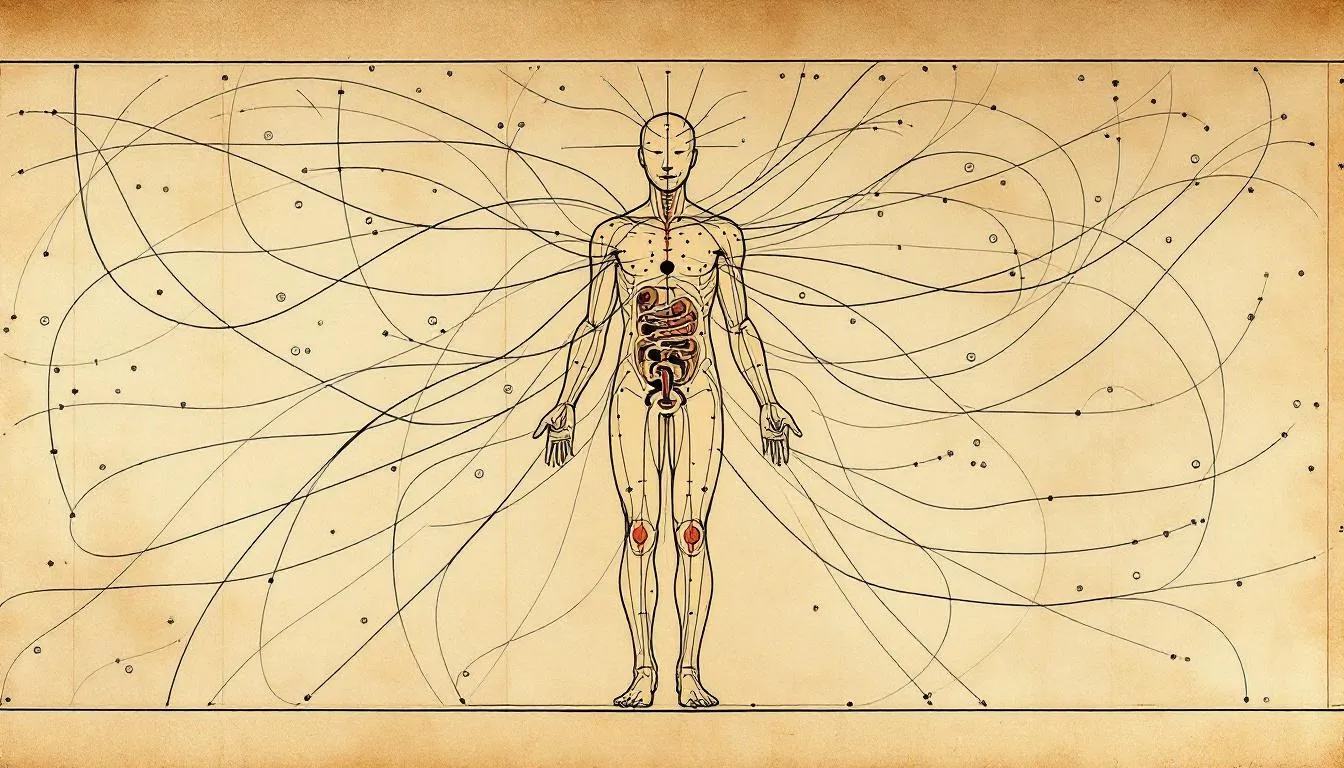
Acupuncture points are therapeutic targets along meridian pathways in traditional Chinese medicine, restoring balance and promoting healing. Strategically located along major meridians, they offer benefits like pain relief, stress reduction, and enhanced energy flow.
Accurate location of these points is vital for effective treatments, as even minor deviations can affect outcomes.
Important Acupuncture Points
Acupuncture points are mapped and standardized, with the World Health Organization recognizing 361 primary points for global practice. The governing vessel has 28 acupoints, and the conception vessel has 24, highlighting the extensive network used in treatments.
Locating Acupuncture Points
Practitioners locate acupuncture points using anatomical landmarks, ensuring precise identification for treatments. This precision ensures safety and effectiveness, maximizing acupuncture’s therapeutic benefits.
Scientific Perspectives on the Meridian System
Meridian theory is increasingly acknowledged in Western medicine, particularly for pain management and rehabilitation. Its integration into Western practices is being explored to enhance holistic treatment approaches.
This cross-disciplinary approach offers a more comprehensive understanding of how treatments can affect different organ systems and promote overall health, particularly in relation to the organ system.
Anatomical Evidence
Research suggests the anatomical basis for acupuncture points may involve complex interactions among connective tissues rather than specific neural pathways. Many points correspond to areas with high electrical conductance, indicating a potential physiological basis for their effects.
Despite ongoing research, a consensus on the anatomical existence of these points is still lacking, but notable observations regarding vascular nerve bundles offer intriguing insights.
Ongoing Research
Acupuncture is increasingly recognized as a viable acupuncture treatment for various health conditions within modern healthcare frameworks. However, debates continue regarding scientific proof of its efficacy.
Despite these debates, research into acupuncture has intensified, leading to ongoing discussions about its effectiveness and applications.
Integrating Meridian Theory into Modern Healthcare
The meridian system serves as an empirical reference in clinical acupuncture, linking various body areas and functions. Increasingly recognized in modern healthcare, it facilitates a more comprehensive approach to patient care.
Integrating meridian theory with Western medical practices allows for holistic treatments addressing both physical and emotional health.
Acupuncture in Modern Medicine
The World Health Organization identifies acupuncture as the most widely adopted traditional medicine globally. Based on the Meridian System, it is integral to acupuncture practice and therapeutic effects.
Despite ongoing debates about its efficacy and mechanisms, the role of meridian theory in acupuncture remains a critical element of its effectiveness.
